


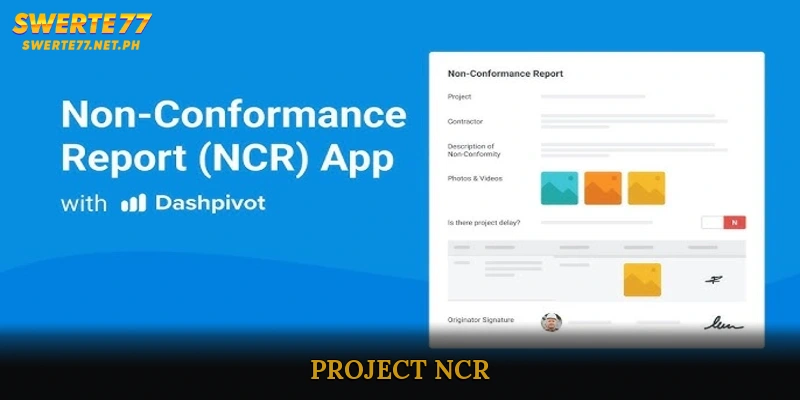
Project NCR provides a structured approach to identify, document, and resolve non-conformities, ensuring higher product quality and operational efficiency. By implementing this system, organizations can reduce errors, mitigate risks, and maintain compliance with international standards. Its systematic process empowers teams to act proactively, track improvements, and foster continuous growth. Experience the benefits of effective quality management and enhance your organization’s performance today with guidance from SWERTE77.
What is Project NCR?
Project NCR, which stands for Non-Conformance Report, plays a crucial role in quality management by documenting deviations from established standards. It allows organizations to identify errors, defects, or inconsistencies in processes, products, or services, enabling them to implement corrective and preventive measures. Through NCR, businesses can ensure that production and service operations consistently meet optimal quality requirements. Key functions of NCR include:
- Recording non-conformities: Documenting any irregularities or issues in manufacturing, operations, or service delivery.
- Root cause analysis: Investigating the underlying reasons for non-conformance to prevent recurrence.
- Corrective and preventive actions: Suggesting solutions to fix existing issues and measures to avoid future deviations.
- Monitoring effectiveness: Tracking the results of implemented solutions to ensure improvements are sustained.
The concept of NCR originates from international quality standards such as ISO 9001, designed to help organizations manage risks and pursue continuous improvement. While originally developed for industrial manufacturing, Project NCR has since expanded into service sectors, construction, and even online businesses.
Core Components of Project NCR

NCR is designed to systematically document and manage instances of non-conformance, ensuring that organizations can address issues effectively and maintain high-quality standards. Understanding its main components is essential for proper implementation and operational efficiency.
The NCR Report (Non-Conformance Report)
At the heart of Project NCR lies the NCR report, a formal document used to record every non-conformity in detail. A standard NCR report typically includes:
- Basic information: Project name, relevant department, and the individual responsible for preparing the report.
- Detailed description of the non-conformance: Clear documentation of the issue, including context and impact.
- Identified or anticipated causes: Analysis of why the non-conformance occurred to guide corrective actions.
- Corrective and preventive measures: Steps to resolve the current problem and prevent recurrence.
- Status and follow-up: Monitoring the implementation and effectiveness of the solutions over time.
Various templates for NCR reports are widely used across industries to standardize documentation and ensure consistency in reporting.
NCR Management System
Many organizations now rely on NCR management software to streamline and optimize Project NCR processes. These tools provide several advantages:
- Automation of recording and analysis: Simplifies the documentation and evaluation of non-conformities.
- Real-time tracking of corrective actions: Enables managers to monitor progress and compliance effectively.
- Integration with quality management systems: Ensures that NCR activities are aligned with broader organizational quality practices.
Standards Applied in Project NCR
Project NCR is often implemented following international standards such as ISO 9001 for general quality management, ISO 13485 for medical devices, and AS9100 for the aerospace industry. Adhering to these standards ensures a systematic approach to handling quality issues, improves reliability, and supports compliance with regulatory requirements.
See more: Star Wars Knights of the Old Republic
Implementation Process of Project NCR

NCR requires a structured approach to ensure that non-conformities are identified, addressed, and prevented effectively. Following a systematic workflow is key for organizations to maintain high-quality standards and continuous improvement.
Step 1: Detecting Non-Conformities
The first step in NCR involves early detection of non-conformities. Organizations should monitor production processes, conduct regular inspections, and pay attention to customer feedback. Prompt identification of deviations ensures that corrective actions can be applied before issues escalate, safeguarding both product quality and customer satisfaction.
Step 2: Recording and Reporting NCR
Once a non-conformity is detected, a detailed NCR report is prepared. This document captures essential information such as the initial cause, project or department involved, and any other relevant details. Accurate reporting in Project NCR is crucial for transparency and helps guide the subsequent analysis and corrective actions.
Step 3: Root Cause Analysis
Analyzing the root cause is a critical phase in NCR. Techniques such as the “5 Whys” method or Fishbone Diagram are commonly used to identify the underlying reasons for the non-conformance. Understanding the true cause allows organizations to implement solutions that address the problem at its source rather than just treating the symptoms.
Step 4: Implementing Corrective Actions
After identifying the root cause, specific corrective measures are proposed. These actions aim not only to resolve the current issue but also to prevent recurrence. Project NCR emphasizes practical and sustainable solutions, ensuring that improvements are effective and measurable.
Step 5: Monitoring and Evaluating Effectiveness
The final step involves tracking the outcomes of implemented solutions. Organizations must monitor progress, evaluate the effectiveness of corrective actions, and document improvements. Continuous evaluation within NCR ensures that non-conformities are fully addressed and contributes to long-term quality enhancement.
Benefits of Implementing Project NCR

NCR offers organizations a structured approach to manage non-conformities, leading to measurable improvements in quality, efficiency, and compliance. Understanding its key benefits highlights why many companies adopt this system as part of their quality management strategy.
Enhancing Product and Service Quality
One of the primary advantages of Project NCR is its ability to identify and correct errors before products or services reach customers. By systematically documenting non-conformities and implementing corrective measures, organizations can significantly reduce defects. According to ISO Quality Review, companies that effectively apply NCR processes experience up to a 40% reduction in product defects while simultaneously improving customer satisfaction. This proactive approach ensures that the final output consistently meets or exceeds quality expectations.
Minimizing Operational Risks
Project NCR also plays a crucial role in risk mitigation. Early detection of potential issues within processes allows organizations to address problems before they escalate, reducing financial, legal, and reputational risks. Businesses that implement a comprehensive NCR system can anticipate and resolve operational disruptions approximately 30% faster than those without such systems. This capability enhances resilience and helps maintain smooth operations even in complex environments.
Improving Efficiency and Standards Compliance
Another key benefit of Project NCR is the improvement in organizational efficiency and adherence to international standards. By facilitating collaboration across departments and providing a clear framework for addressing non-conformities, the system streamlines workflows and reduces redundancies. Moreover, NCR ensures that processes comply with globally recognized quality management standards such as ISO 9001 and ISO 14001. Consistent compliance not only strengthens credibility but also supports long-term competitive advantage.
Project NCR serves as a powerful tool for improving quality, minimizing risks, and ensuring compliance across all operations. By adopting this structured approach, organizations can take proactive steps to address issues, optimize processes, and drive continuous improvement. Join the movement to elevate your business standards, enhance efficiency, and achieve measurable results. Start implementing NCR today and unlock its full potential with expert support from SWERTE77.





